MedIntegrity FPOSM-V3.0 Manufacturer & Supplier
Freezing Point Osmometer FPOSM-V3.0
Overview
Designed and manufactured by MedIntegrity LLC — the freezing point osmometer is built in our own factory, part of a 28-patent product line in pharmaceutical testing equipment.
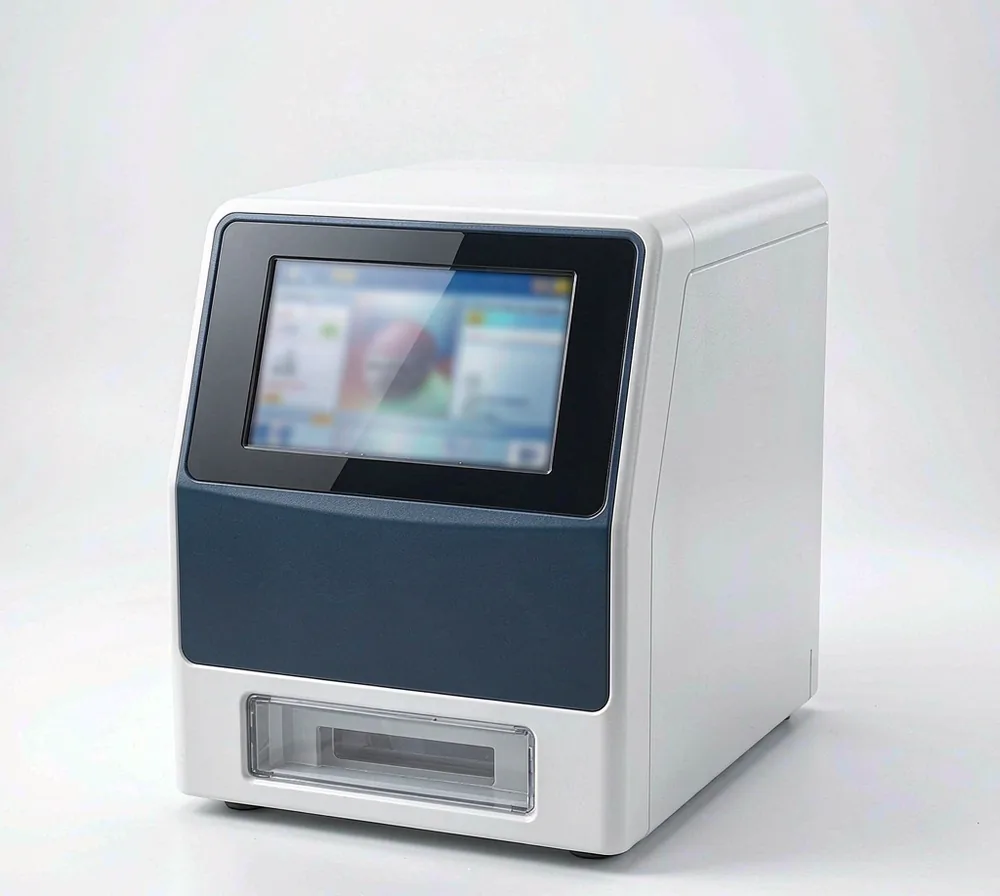
The MedIntegrity Freezing Point Osmometer FPOSM-V3.0 device is an on-invasive in-vitro diagnostic device for in-vitro analysis of human blood, urine, semen and other samples which is suitable for determining the osmotic pressure of higher molecular substances in aqueous or organic solvents. Its purpose is to provide information to help identify, diagnose monitor and treat physiological conditions, states of health and illnesses. The MedIntegrity Freezing Point Osmometer FPOSM-3.0 is based on the Raoult principle,the so-called Raoult freezing point principle is that if the total number of particles dissolved perunit volume of any solution is the same, the value that causes the freezing point of the solution to drop is also the same.The MedIntegrity Freezing Point Osmometer FPOSM-3.0 is a cryoscopic
Technical Specifications
Full specification sheet available on request — contact us.
Specifications subject to change for improvement without notice. For the latest data sheet or technical questions, contact your MedIntegrity representative.
In practice, the FPOSM-V3.0 needs only a small sample and follows the reference method, so osmolality results line up across labs and against reference standards. That matters when the value goes on the label.
Technical Documentation
Notes From Our Technical Documentation
[Heading 3] 1.2 Product Features
Largely operator independent More sensitive Customization
Product Overview & Application Fields
2.1 Product Definition The MedIntegrity Freezing Point Osmometer FPOSM-V3.0 device is an on-invasive in-vitro diagnostic device for in-vitro analysis of human blood, urine, semen and other samples which is suitable for determining the osmotic pressure of higher molecular substances in aqueous or organic solvents. 2.2 Product Purpose Its purpose is to provide information to help identify, diagnose monitor and treat physiological conditions, states of health and illnesses. 2.3 Application Scope Pharmaceutical analysis Environmental analysis
Technical Guide
The physical basis: Raoult, in plain terms
The freezing point depression method rests on a property of solutions that is as old as Raoult: if the total number of particles dissolved per unit volume of any solution is the same, the value that causes the freezing point of the solution to drop is also the same. In other words, the depression of the freezing point is a direct function of particle concentration — not of which particle it is, only of how many there are per unit volume.
That is what makes the method a reference method. It measures osmolality the way the physics of the solution defines it, independent of the chemistry of the solute. A cryoscopic instrument — and the FPOSM-V3.0 is a cryoscopic instrument — reads that depression and reports the osmolality that corresponds to it, in the units your label or your monograph requires.
Why the reference method still carries the label
Parenteral products, blood products and dialysis fluids carry osmolality on the label or verify it in QC, and the freezing point depression method is the reference against which those numbers are set. Small sample volumes, high accuracy, and results that follow the reference method — those are the three properties that keep it in use for formulation development and for the verification work that has to stand up to a pharmacopeial comparison.
The FPOSM-V3.0 is designed for the in-vitro analysis of human blood, urine, semen and other samples, and for determining the osmotic pressure of higher molecular substances in aqueous or organic solvents. Its purpose, in the product definition, is to provide information that helps identify, diagnose, monitor and treat physiological conditions — the clinical side of the same physics that the pharmaceutical side uses for release and reference work.
Where it sits in the testing program
The application scope the product carries is pharmaceutical analysis and environmental analysis — the two contexts in which osmolality is a number you need, not a number you can estimate. In the pharmaceutical context, that is formulation development (where the osmolality of the final product has to be where the label says it is) and QC verification (where the measured value has to match the reference method, because the reference method is the one the comparison is made against).
The product features are stated plainly: largely operator independent, more sensitive, and customizable. The first two are the reasons the method stays in the routine — the result does not depend on the operator's hand, and the sensitivity is what makes a small-sample measurement defensible. The third is the reason the instrument fits the program rather than the program fitting the instrument: the configuration is set to the work, and the work does not change to suit the instrument.
Because the method is the reference method, comparison against reference standards and transfer between laboratories stay consistent — the same physics, the same units, the same answer, in any lab that runs it. That is the property that makes freezing point depression the method you reach for when the number has to be right, not approximately right.
Formulation development, where the number has to be right
In formulation development, osmolality is one of the numbers that has to be where the label says it is, and the freezing point depression method is the reference against which that is judged. The FPOSM-V3.0 gives the development team the reference-method answer on small sample volumes, which is the practical constraint in development: every formulation run costs material, and the method that needs the least of it while giving the reference answer is the one the program builds around.
The same physics carries the number to the label. When the product's osmolality is stated on the label, or verified in QC against the monograph, the comparison is made against the reference method — which is why the method stays in the routine rather than being retired in favor of a faster estimate. A cryoscopic instrument reads the depression the way the physics of the solution defines it, independent of the chemistry of the solute, and that independence is the property the comparison depends on.
QC verification and the comparison that has to hold
On the QC side, the job is verification: the measured value has to match the reference method, because the reference method is the one the comparison is made against. The FPOSM-V3.0 is designed for the in-vitro analysis of human blood, urine, semen and other samples, and for determining the osmotic pressure of higher molecular substances in aqueous or organic solvents — the application scope is pharmaceutical analysis and environmental analysis, and the purpose is to provide the information that identifies, diagnoses, monitors and treats physiological conditions on the clinical side of the same physics.
Because the method is the reference method, the comparison holds across the contexts: formulation development, QC verification, and transfer between laboratories all run the same physics in the same units and get the same answer. That is the property that makes freezing point depression the method you reach for when the number has to be right, not approximately right — largely operator independent, more sensitive, and customizable to the program rather than the program to the instrument.
The supercooled drop, and why the reading is stable
The cryoscopic measurement works on a drop of sample that is cooled below its freezing point and held supercooled — liquid, but past the point where a reference method expects solid. The instrument then initiates the freezing step in a controlled way, and the temperature at which the supercooled drop equilibrates is what gets read as the freezing point. Because the depression is measured against that equilibration rather than against the moment ice first appears, the reading is not a race against the first crystal — it is a settled temperature.
That is the practical consequence for a reference method: the result does not hinge on when a particular operator saw the first sign of freezing, because the instrument defines the initiation and the equilibrium. The same small volume, run by the same instrument on the same day or a different one, comes back at the same depression — which is the stability the comparison against the pharmacopeial value depends on.
Frequently Asked Questions
What principle does the FPOSM-V3.0 use?
Freezing point depression, based on the Raoult principle: the depression of the freezing point is a direct function of the total number of dissolved particles per unit volume — so the measured depression gives the osmolality, independent of the solute's chemistry.
What samples can it measure?
Human blood, urine, semen and other samples for in-vitro analysis, and higher molecular substances in aqueous or organic solvents — the application scope is pharmaceutical analysis and environmental analysis.
Why use freezing point depression?
It is the reference method for osmolality: small sample volumes, high accuracy, and pharmacopeia-aligned results — which is why comparison against reference standards and transfer between laboratories stay consistent.
What products is it used for?
Parenteral products, blood products, dialysis fluids and formulation development — wherever osmolality must be stated on the label or verified in QC against the reference method.
What are the product features?
Largely operator independent, more sensitive, and customizable — the result does not depend on the operator, the sensitivity supports small-sample measurements, and the configuration is set to the program.
Why use freezing point depression?
It is the reference method for osmolality in injectables, biologics and reference-standard comparisons — small sample volumes, high accuracy and pharmacopeia-aligned results.
What products can it be used for?
Parenteral products, blood products, dialysis fluids and formulation development — wherever osmolality must be stated on the label or verified in QC.
How does it support comparison against reference standards?
Because results follow the reference method, comparison against reference standards and transfer between laboratories stay consistent.
Need a quote or technical advice?
Tell us your application — our U.S. team responds with product selection, documentation and pricing.
Request a Quote