MedIntegrity WGT-1000 Manufacturer & Supplier
WGT-1000 Glove Integrity Tester
Overview
Designed and manufactured by MedIntegrity LLC — the glove integrity tester is built in our own factory, part of a 28-patent product line in pharmaceutical testing equipment.
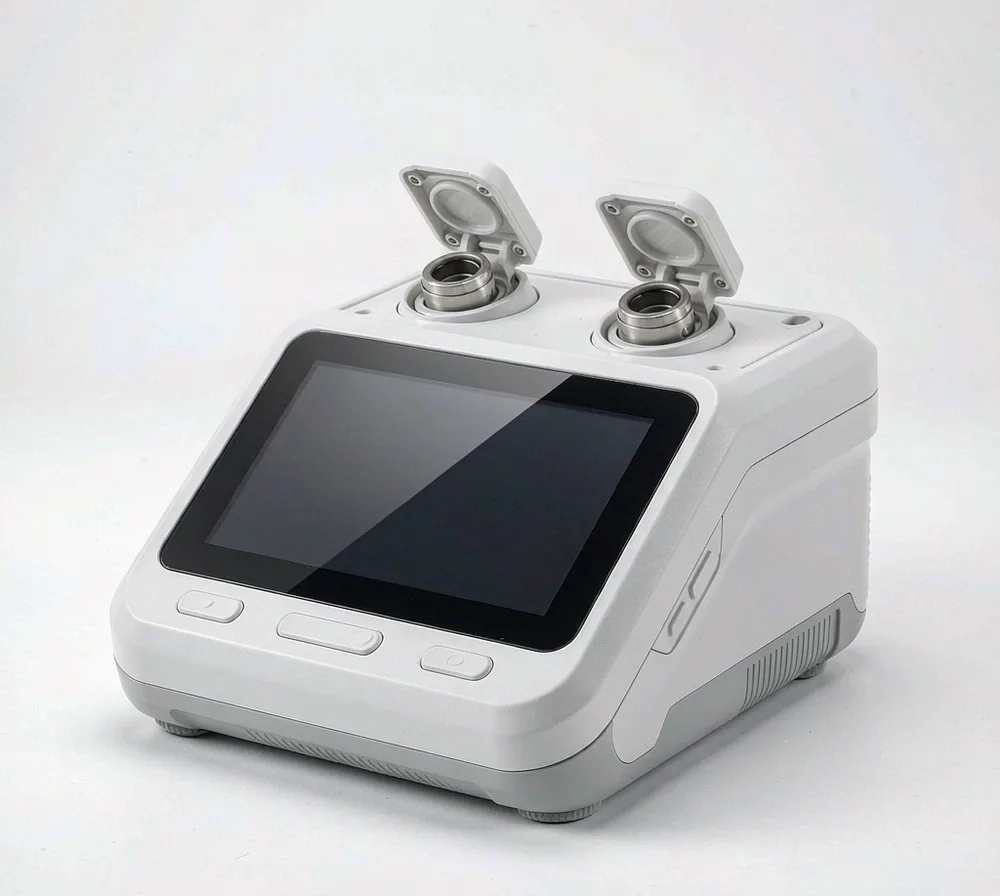
MedIntegrity Glove Integrity Testing Technology Wireless is better for Isolator & RABS MedIntegrity ·USA Note:Please so kindly understand that the information and specification in this catalogue are subject to change for improvement without notice. If necessary,or any technical question,please contact your MedIntegrity representative. Barrier systems such as isolators or RABs play a fundamental role in the protection of people and products in pharmaceutical production. Only tenths of a millimetre thick, gloves are the most crucial interface in these hermetically sealed units. To ensure that barrier systems are sterile and processes remain safe, a thorough and regular inspection of glove integrity is vital. The regulatory requirements for gloves are strict. As specifically stated in the EU GMP Annex 1 revision, a glove integrity test is fundamental for the correct pre- and post-production qualification in an aseptic process during which external contamination can affect the correct product quality standard. Since the glove is the most probable source of contamination, it must be checked before and after production in order to guarantee correct production to verify if contamination occurred during production and during each critical phase of the production process,ensuring compatibly with its Quality Risk management and therefore to guarantee the correct production quality standard.
Technical Specifications
| Test Time | 3-6min |
|---|---|
| Primary Power | DC12 V 20W |
| Electronic Testing Record | YES |
| Minimum Hole Diameter | 100μm |
| History Records | ≥5years capacity |
| Audit Trail | ≥5years, Quickly Audit according the time |
| Model | WGT-1000Measurement Method is Pressure Decay |
| Minimum Hole Diameter | φ100 µm |
| History Records | ≥5 years capacity |
| Seal Pressure | ≤200 kPa |
| Test Time | 3~6min |
Specifications subject to change for improvement without notice. For the latest data sheet or technical questions, contact your MedIntegrity representative.
In practice, the WGT-1000 runs pressure-decay glove checks without a tether, and the record keeps itself for five years or more. That's the setup our aseptic-line customers use for routine inspection — no sampling, no paper trail to chase.
Technical Documentation
Notes From Our Technical Documentation
Regulations & Guidance for Glove Integrity Testing
3.1 EU GMP Sterile Annex 1 As specifically stated in the EU GMP Annex 1 revision, a glove integrity test is fundamental for the correct pre- and post-production qualification in an aseptic process during which external contamination can affect the correct product quality standard. Since the glove is the most probable source of contamination, it must be checked before and after production in order to guarantee correct production to verify if contamination occurred during production and during each critical phase of the production process,ensuring compatibly with its Quality Risk management and therefore to guarantee the correct production quality standard. 3.2 FDA Aseptic Processing Guidance Maintenance of isolator systems differs in some significant respects from the traditional, non-isolated aseptic processing operations. Although no isolator forms an absolute seal,very high integrity can be achieved in a well-designed unit. However, a leak in certain components of the system can constitute a significant breach of integrity.The integrity of gloves, half-suits, and seams should receive daily attention and be addressed by a comprehensive preventative maintenance program . Replacement frequencies should be established in written procedures that ensure parts will be changed before they breakdown or degrade. Transfer systems, gaskets, and seals are among the other parts that should be covered by the maintenance program. 3.3 PIC/S ISOLATORS USED FOR ASEPTIC PROCESSING AND STERILITY TESTING 9.5.3 A program to minimize the risk of loss of integrity of gloves, sleeves and suits should be present. This should include operator practices, vigilance and the absence of sharp edges. There should also be an all encompassing preventative maintenance program that includes specification of examination and preemptive replacements.
Technical Guide
Why the glove is the weak point of a barrier system
An isolator or RAB holds its sterility on a number of small assumptions, and the glove is the weakest of them. It is the only part of the barrier system that a human touches directly, it is only tenths of a millimetre thick, and it flexes on every single transfer through the port. The regulator's position is stated straight in the EU GMP Annex 1 revision: the glove is the most probable source of contamination, and it must be checked before and after production and during each critical phase of the process, consistent with your quality risk management.
That is not a suggestion for your SOPs. It is the design basis for the instrument: a test that runs before the campaign, after the campaign, and at the critical phases in between — fast enough that it becomes a habit, and documented enough that it becomes evidence.
What the pressure decay test is actually doing
The test pressurizes the glove at the port to a seal pressure — up to 200 kPa on this instrument — closes the loop, and watches what the pressure does. An intact glove holds. A leak, even one as small as a 100 µm hole, lets the pressure decay at a measurable rate, and the instrument quantifies that rate rather than guessing at it.
A full check takes 3 to 6 minutes. In a campaign that runs for hours or days, that is nothing. The electronic record captures each run with operator and timestamp, so the 'checked before and after production' line in your SOP is provable from the instrument instead of asserted from memory.
Wireless, by design
The WGT-1000 runs on DC 12 V at 20 W and is built for isolator and RABS environments where a cable running through the barrier is itself a contamination path. Wireless operation means the test happens at the glove port without a tether crossing the containment boundary — which is also why it sits comfortably in the preventative maintenance program rather than competing with the production schedule.
Records stay with the instrument: history capacity of five years or more, an audit trail of the same depth, and quick audit retrieval by time. Pulling 'all glove checks during this campaign' is a search, not a reconstruction across paper logs.
For reference, WGT series units are in daily operation at BeiGene USA (WGT-1200, 20 units) and at Sunny Pharmaceutical in Egypt (WGT-1000) for routine aseptic-line inspection.
The maintenance program the glove test belongs to
FDA's aseptic processing guidance treats the glove as part of a broader maintenance conversation: the integrity of gloves, half-suits and seams should receive daily attention under a comprehensive preventative maintenance program, with replacement frequencies established in written procedures so that parts are changed before they break down or degrade. Transfer systems, gaskets and seals are in the same program — the glove test is one documented routine inside it, not a standalone event.
PIC/S guidance for isolators used in aseptic processing and sterility testing goes the same direction: a program to minimize the risk of loss of integrity of gloves, sleeves and suits should be present, covering operator practices, vigilance, and the absence of sharp edges, with an all-encompassing preventative maintenance program that specifies examination and preemptive replacement. The WGT-1000's electronic record is the examination leg of that program: each pre- and post-production check, timestamped, with the decay number that shows the glove held.
Where the test sits in your routine
The Annex 1 expectation is simple to state and hard to do by hand: check the glove before production, after production, and during each critical phase of the process. On a campaign that runs for hours, the test has to be fast enough to become a habit rather than a disruption. At 3 to 6 minutes per check, the WGT-1000 fits that schedule, and because each run is captured with the operator and the time, the pre- and post-production checks your SOP calls for are provable from the instrument instead of a signature on a log sheet.
The 200 kPa seal pressure and the 100 µm detection limit mean the check is sensitive enough to find the defects that actually threaten sterility, while the wireless operation keeps a cable out of the barrier — a cable through the isolator wall is itself a contamination path, and it is one fewer thing to manage in the room.
Frequently Asked Questions
What is the smallest hole it can detect?
A 100 µm hole, by the pressure decay method, per the specification.
How long does one test take?
3 to 6 minutes per the specification, at a seal pressure of up to 200 kPa.
Why wireless?
A cable through the isolator barrier is a contamination risk. DC 12 V / 20 W operation keeps the test tether-free at the glove port, in the environment where the glove actually is.
How long are records kept?
Five years or more of history and five years or more of audit trail on the instrument, with quick retrieval by time.
How often should we test?
EU GMP Annex 1: before and after production, and during each critical phase of the production process, set by your quality risk management. The test is fast enough to run on that schedule without becoming a bottleneck.
What leak sizes can it detect?
Leaks down to 100 µm, by the pressure-decay method — suitable for routine aseptic-line glove inspection.
How long are electronic records retained?
Electronic records are kept for ≥5 years, supporting trend review and audit trails.
Where is the WGT series deployed?
In isolators, RABS and glove boxes. For reference, WGT-1200 units are in daily operation at BeiGene USA.
Need a quote or technical advice?
Tell us your application — our U.S. team responds with product selection, documentation and pricing.
Request a Quote